ReviewSync — AI Review Management Platform
( Role )
Full-stack Developer
( Scope )
- The Next.js frontend — public site
- Client and admin dashboards
- I18n and themes — the Express and MongoDB API with auth
- OTP password reset and role-based access
- The webhook endpoints the n8n workflows write to
- Stripe subscriptions with per-location pricing
- The analytics behind the dashboards
( Stack )
- Next.js
- Redux Toolkit
- NextAuth
- Recharts
- i18next
- Express
- MongoDB
- Stripe
- n8n webhooks
- jsPDF


( Brief )
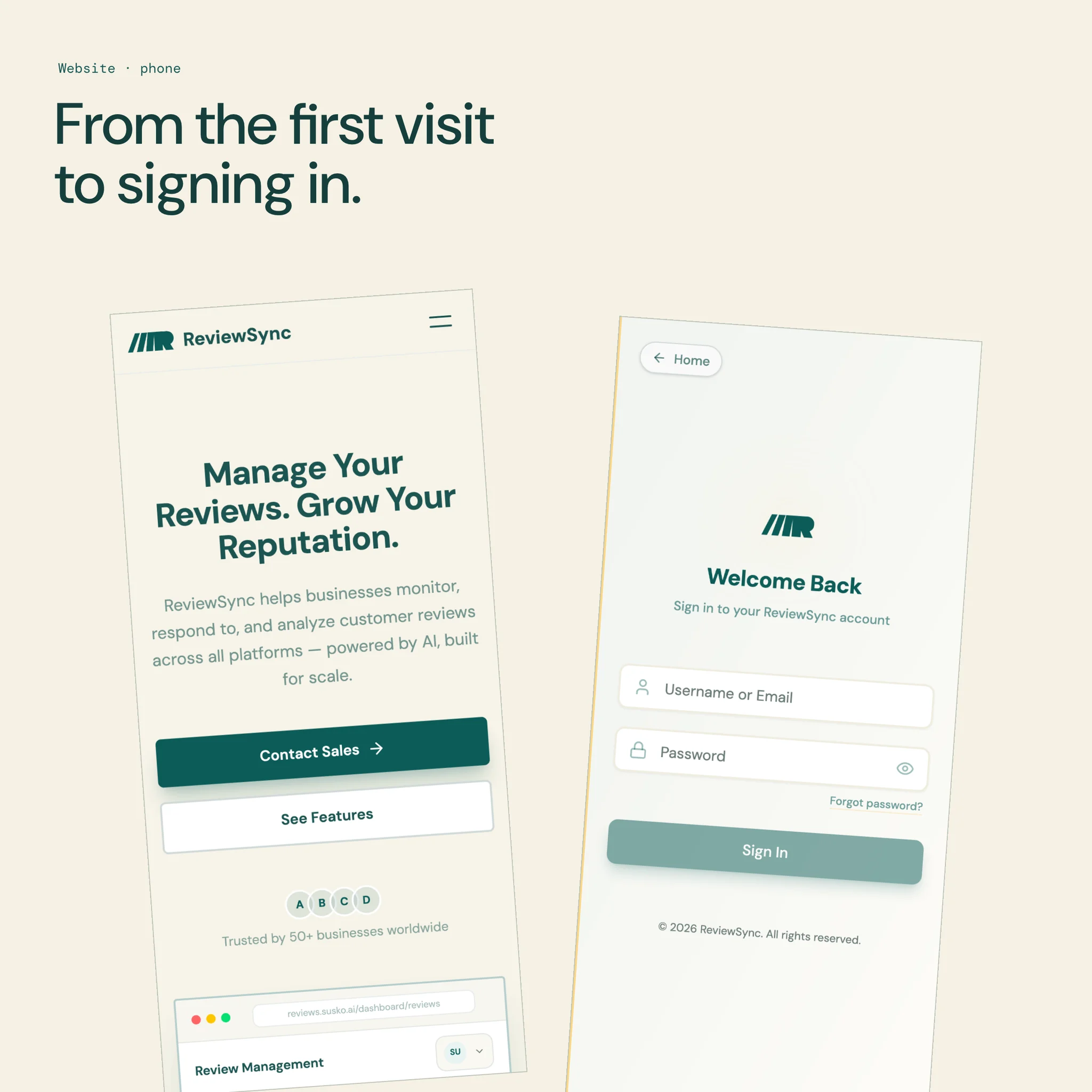
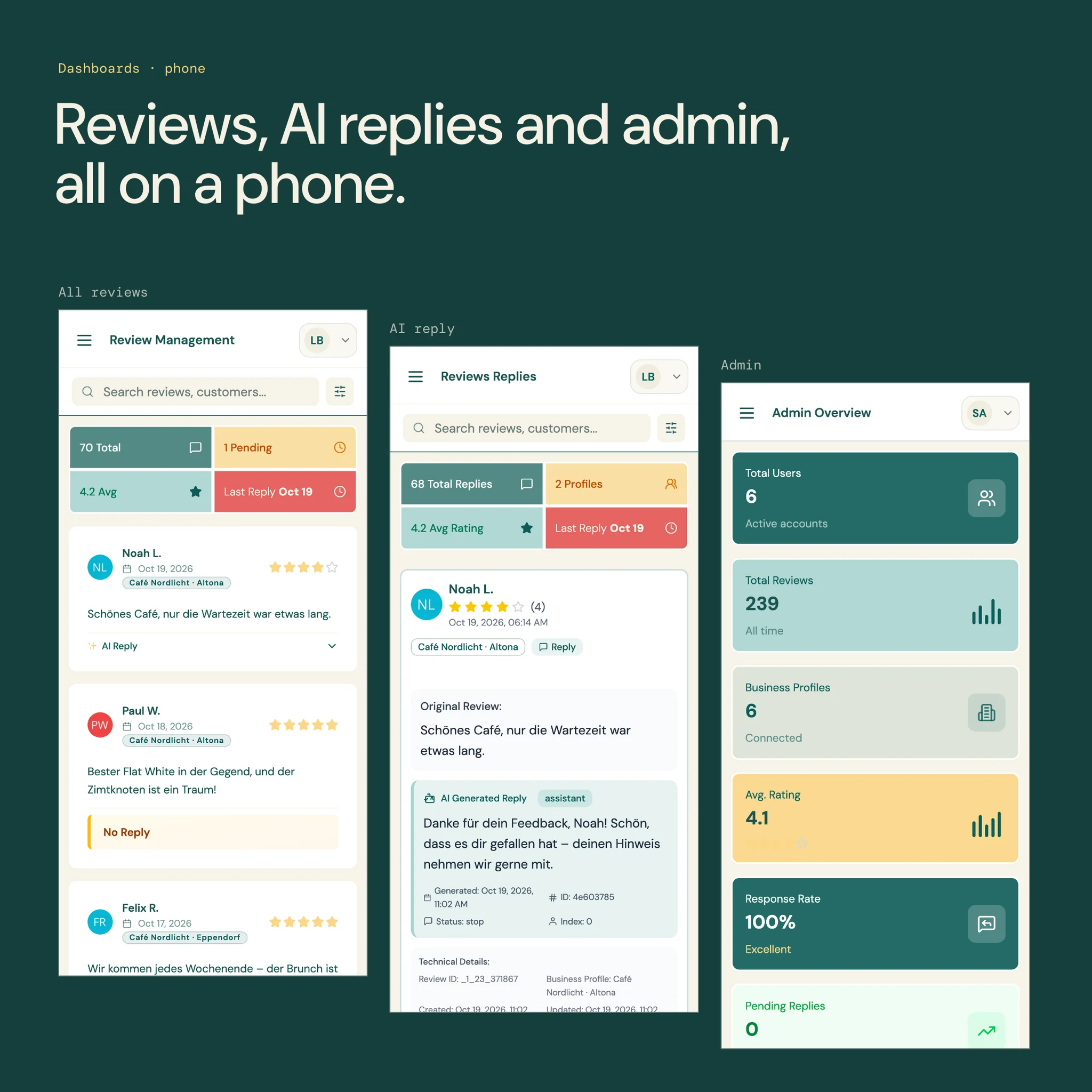
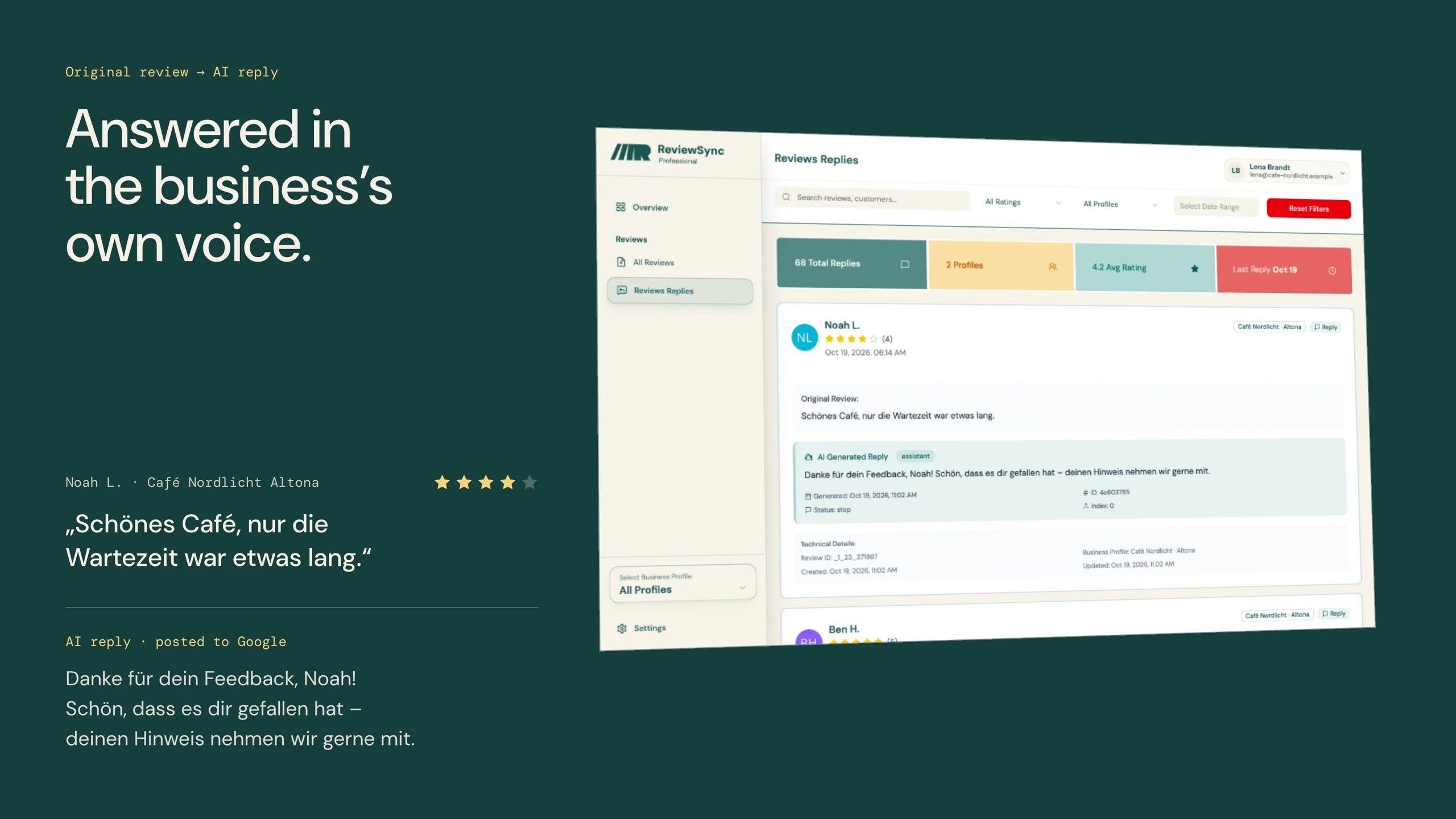
ReviewSync is Susko's product for businesses with Google reviews to keep up with — cafés, restaurants, practices, studios. Reviews come in through an n8n workflow per location, an AI writes a reply in the business's own voice, and the reply is posted back to Google. I built the platform around that automation: the public site with pricing and checkout, the client dashboard, and the admin dashboard Susko runs it from.
( Approach )
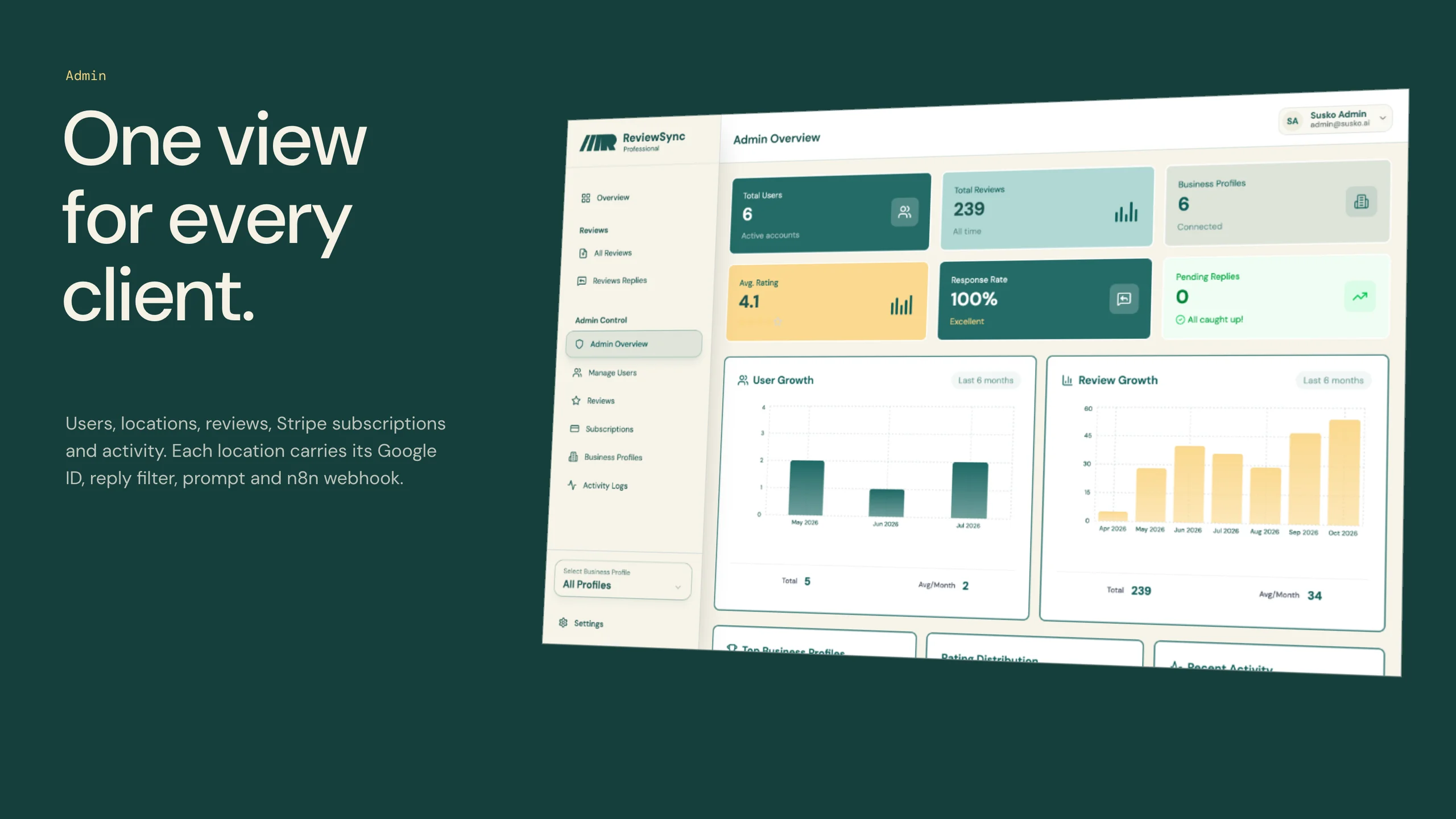
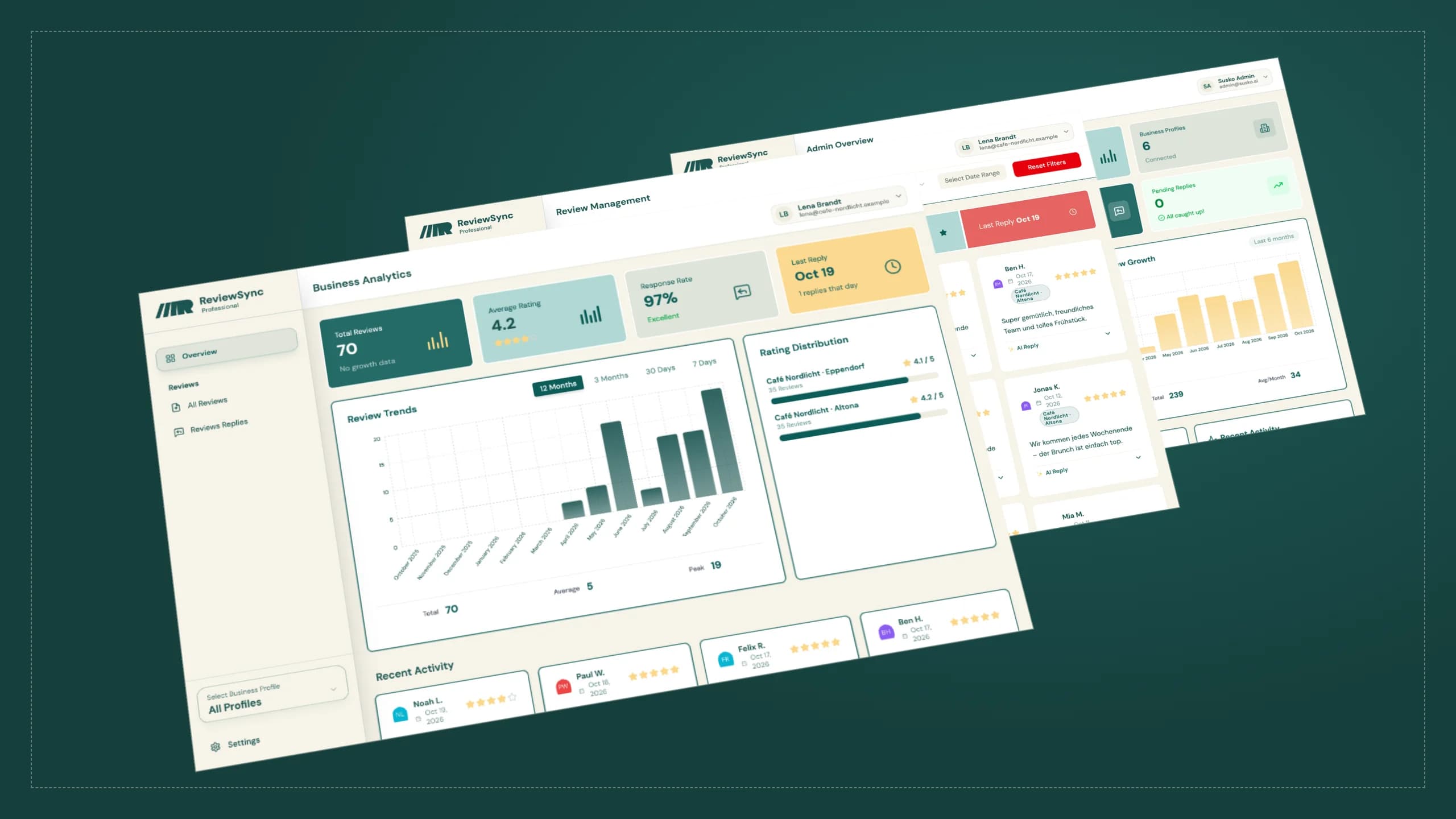
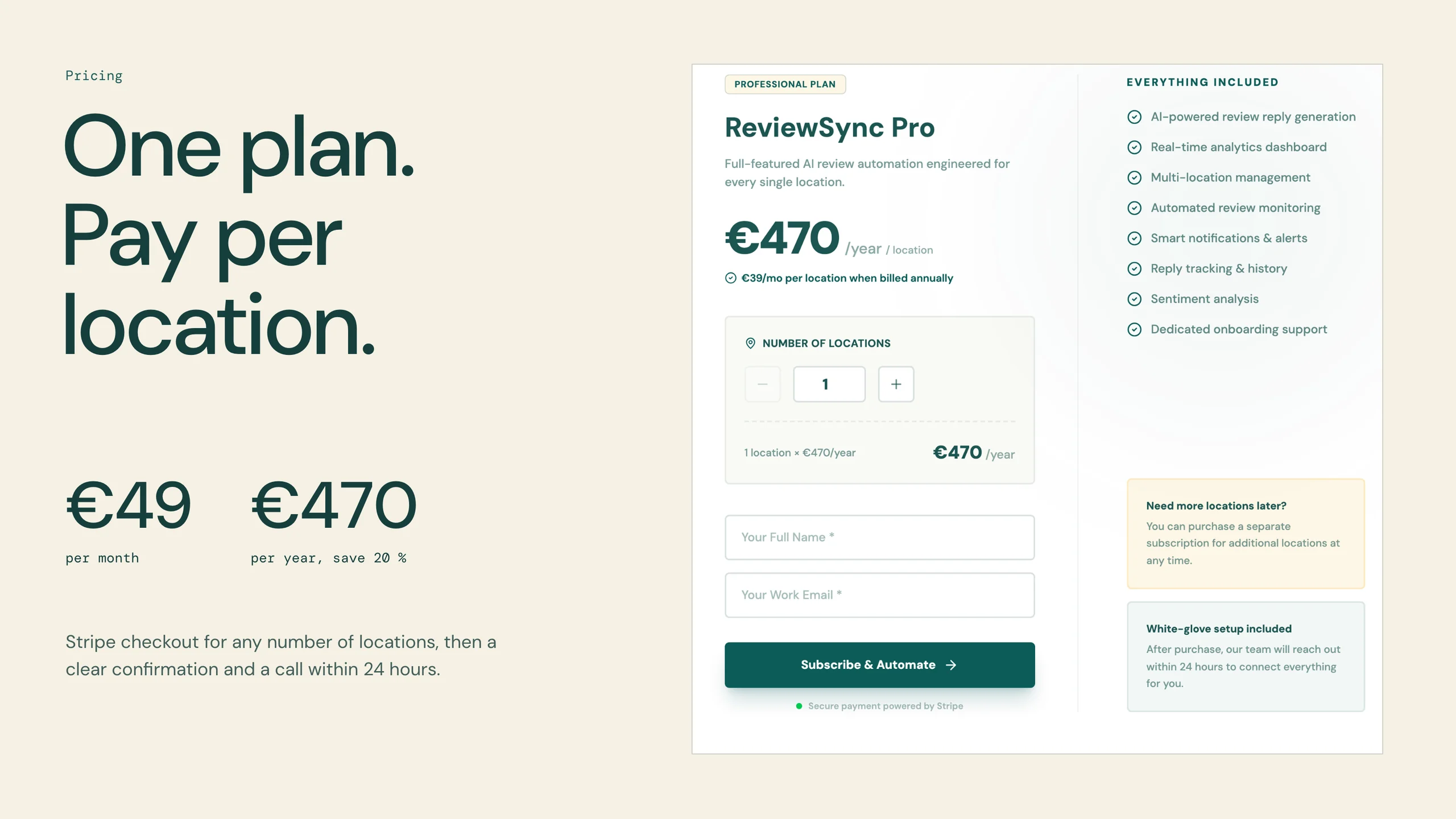
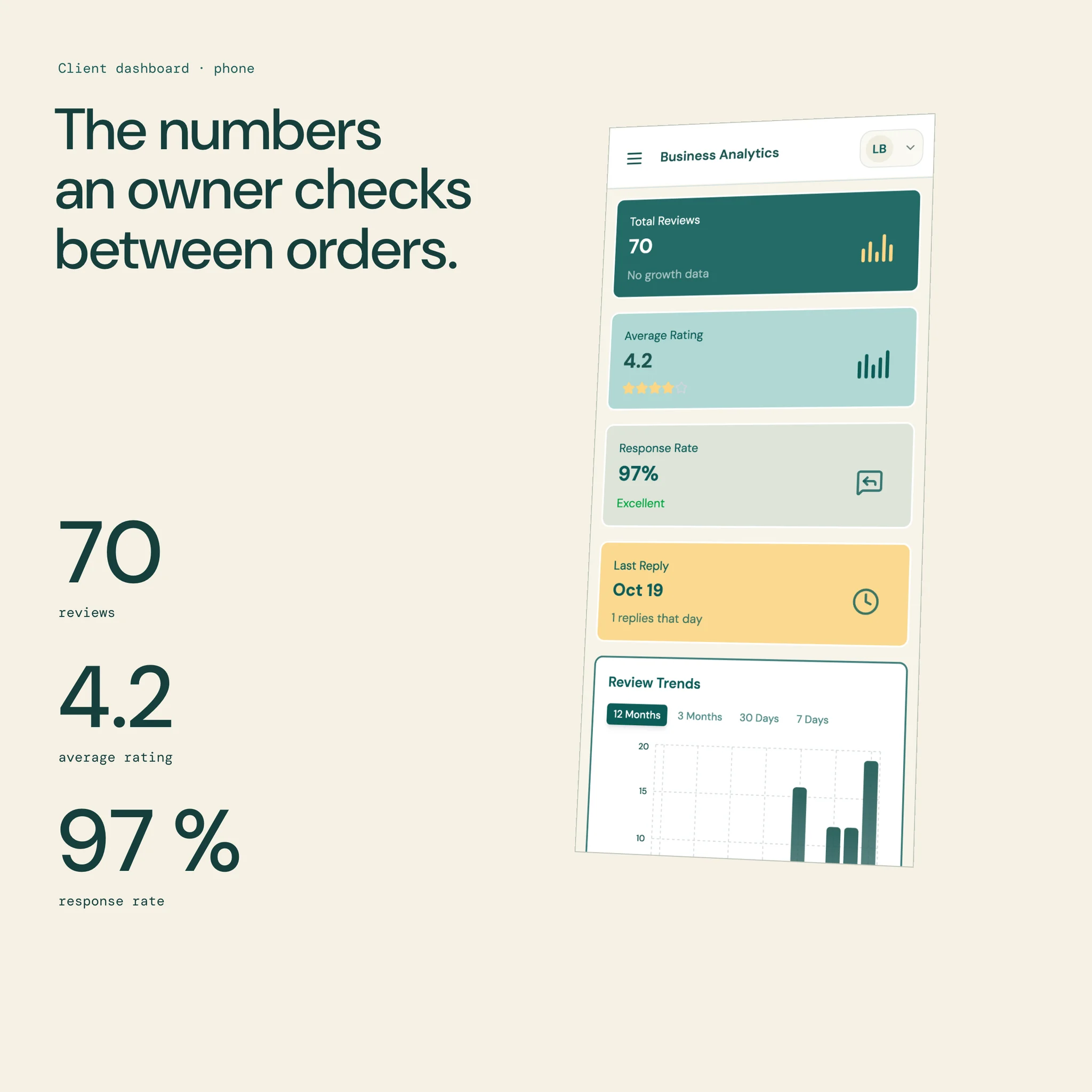
Clients see their reviews, the AI replies, trends by month, quarter, 30 or 7 days, the rating per location and their response rate, and can export reports as PDF. The admin side manages users and their locations — each with its Google location ID, reply filter, prompt and webhook — plus reviews across all clients, Stripe subscriptions and an activity log. Pricing is one plan per location, monthly or annual; after checkout the client gets a clear confirmation and Susko reaches out within 24 hours, because setup is done by hand. The whole interface works in German and English, with six colour themes and a dark mode.
( Challenge )
The product changed shape while I built it: it started as one client's dashboard and became a multi-tenant product sold by agents. I worked through those decisions with the co-founder — how per-location pricing behaves in Stripe, what a client sees after paying when setup is manual, which fields the admin needs so a new location can be wired to its n8n workflow — and kept every query scoped so a client only ever sees their own locations.
( Responsibilities )
The Next.js frontend — public site, client and admin dashboards, i18n and themes — the Express and MongoDB API with auth, OTP password reset and role-based access, the webhook endpoints the n8n workflows write to, Stripe subscriptions with per-location pricing, and the analytics behind the dashboards.